.svg)

PIPEDA Compliance Isn’t Just About Security—Here’s Where Most Programs Miss

Alex Oosterman

Focusing only on storage and security leaves major gaps in PIPEDA compliance. Four fair information principles are often skipped, creating risks that technical safeguards alone cannot fix.
A compliance program built only around technical safeguards has a structural blind spot: it can lock every server behind strong encryption and still have no process for answering a customer's request for their own data. That gap in scope — not a failure of security — is what PIPEDA compliance actually guards against.
Storing data securely and keeping intruders out feels like the whole job, and for many businesses it's where the privacy conversation stops. Yet that's only part of the story, because the real exposure sits in what gets left out once a compliance program narrows its focus to storage and security controls alone.
PIPEDA — Canada's main privacy law for private-sector organizations — sets out ten fair information principles, and most of them have nothing to do with firewalls. They govern how you collect personal data, how you explain that collection to people, and how you share what you hold.
A program built to satisfy every one of those principles looks very different from one built around technical safeguards alone, and treating some principles as optional is exactly how gaps form. Security tools can't close those gaps, so exposure tends to sit quietly until a complaint or an investigation brings it forward.
Grasping that fuller scope is the starting point for a privacy program that protects the business itself, not just the data sitting on its servers.

Why security-focused PIPEDA compliance leaves you exposed
Most privacy efforts start with locking down systems, since firewalls, encryption, and access controls are the safeguards everyone recognizes first. PIPEDA's expectations reach well past those technical measures, though, because the law asks you to manage personal information responsibly at every stage, from the moment you collect it to the moment you dispose of it.
That broader mandate means thinking about how you gather information, how clearly you explain your practices, and how you respond when someone asks what you hold on them. Security can't substitute for any of that.
So gaps in transparency, consent, or accountability stay gaps no matter how well your systems are locked down, and a business can be fully secure while still falling short of the law. Protecting personal data, under PIPEDA, is about more than keeping it safe from outside attack.
Four fair information principles often overlooked by businesses
Keeping data secure is the principle every business already expects, but four other fair information principles — the standards PIPEDA sets for handling personal data responsibly — get treated as optional far more often than they should. None of them is optional, and skipping any one of them creates real privacy risk.
1. Openness
Your privacy policies and practices need to be easy to find and easy to understand, in plain language rather than legal wording. Burying them in dense text or tucking them away on your website doesn't meet the standard.
2. Individual access
People have the right to know what personal information you hold about them, and you must respond to those requests quickly, with only a narrow set of legal exceptions. Delay or refusal outside those exceptions puts you offside.
3. Challenging compliance
Every business needs a clear, visible way for people to question how their data is handled. That means a working complaints process and someone specifically accountable for responding to it.
4. Accuracy
Personal information has to stay as accurate, complete, and current as its purpose requires. Outdated or incorrect records can put you in violation even while every server stays perfectly secure.
Beyond technical safeguards: The real cost of skipping principles
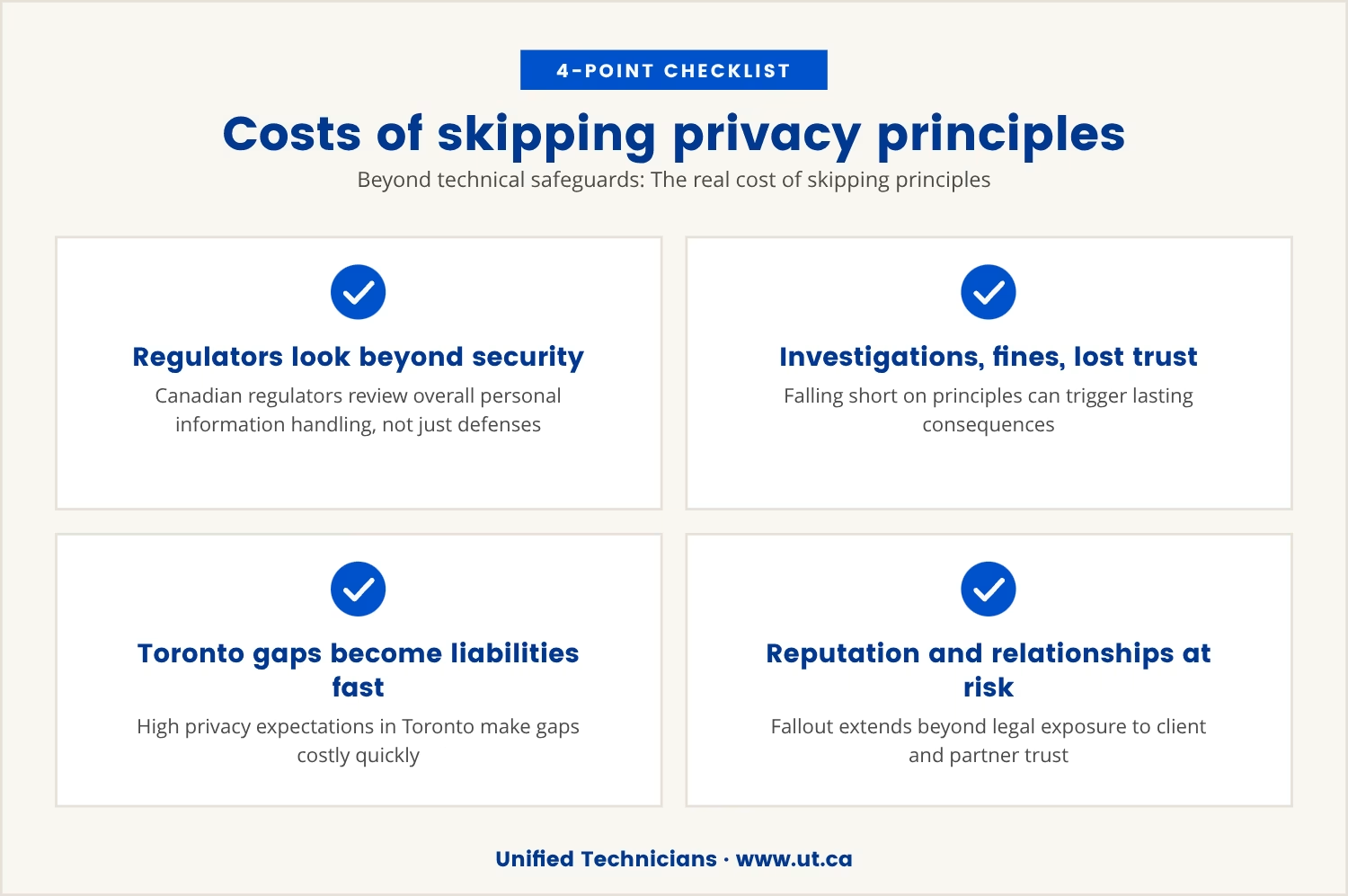
Ignoring these four principles opens risks that no security control can fix. If someone requests a copy of their own data and you can't produce it, you're out of compliance, regardless of how tightly your servers are locked down.
Canadian regulators, including the Office of the Privacy Commissioner, examine how you handle personal information across the board, not only how you defend it from hackers. Falling short on the full set of fair information principles can bring investigations, fines, and a loss of customer trust that follows long after the finding itself.
In Toronto, where privacy expectations run high and many organizations handle sensitive data daily, these gaps turn into liabilities quickly. The fallout isn't confined to legal exposure either — it reaches reputation, and it reaches the relationships you've built with clients and partners.
How PIPEDA compliance requirements apply to your Toronto business
Any Toronto organization that handles personal information in the course of business falls under PIPEDA, whether that information is a customer's contact details or an employee's file.
Canadian data residency and data sovereignty rules — the requirement that you know where data is physically stored and under whose legal authority — add another layer, but location is only one part of the equation. How you collect, use, and disclose personal information matters just as much as where it sits.
It's natural to focus on technical controls, particularly once data volumes grow large, yet the law still expects clear privacy policies, working request-handling processes, and a way to correct errors. If you haven't reviewed your approach lately, the question worth asking is whether your privacy program covers every principle, or only the ones that feel familiar.
The 10 fair information principles: What a complete program covers
A privacy program that genuinely satisfies PIPEDA addresses all ten fair information principles together, and each one covers distinct ground:
- Accountability: Assigning responsibility for privacy compliance within your organization.
- Identifying purposes: Explaining why you are collecting personal information before or at the time of collection.
- Consent: Getting meaningful permission from individuals for the collection, use, or disclosure of their data.
- Limiting collection: Only gathering information that is necessary for your stated purposes.
- Limiting use, disclosure, and retention: Using and sharing information only as needed, and keeping it only as long as required.
- Accuracy: Ensuring information is correct and current.
- Safeguards: Protecting personal data with appropriate security measures.
- Openness: Making your privacy practices clear and accessible.
- Individual access: Allowing people to see and correct their personal information.
- Challenging compliance: Providing a way for individuals to question your privacy practices and get answers.
Why a security-only approach misses the mark
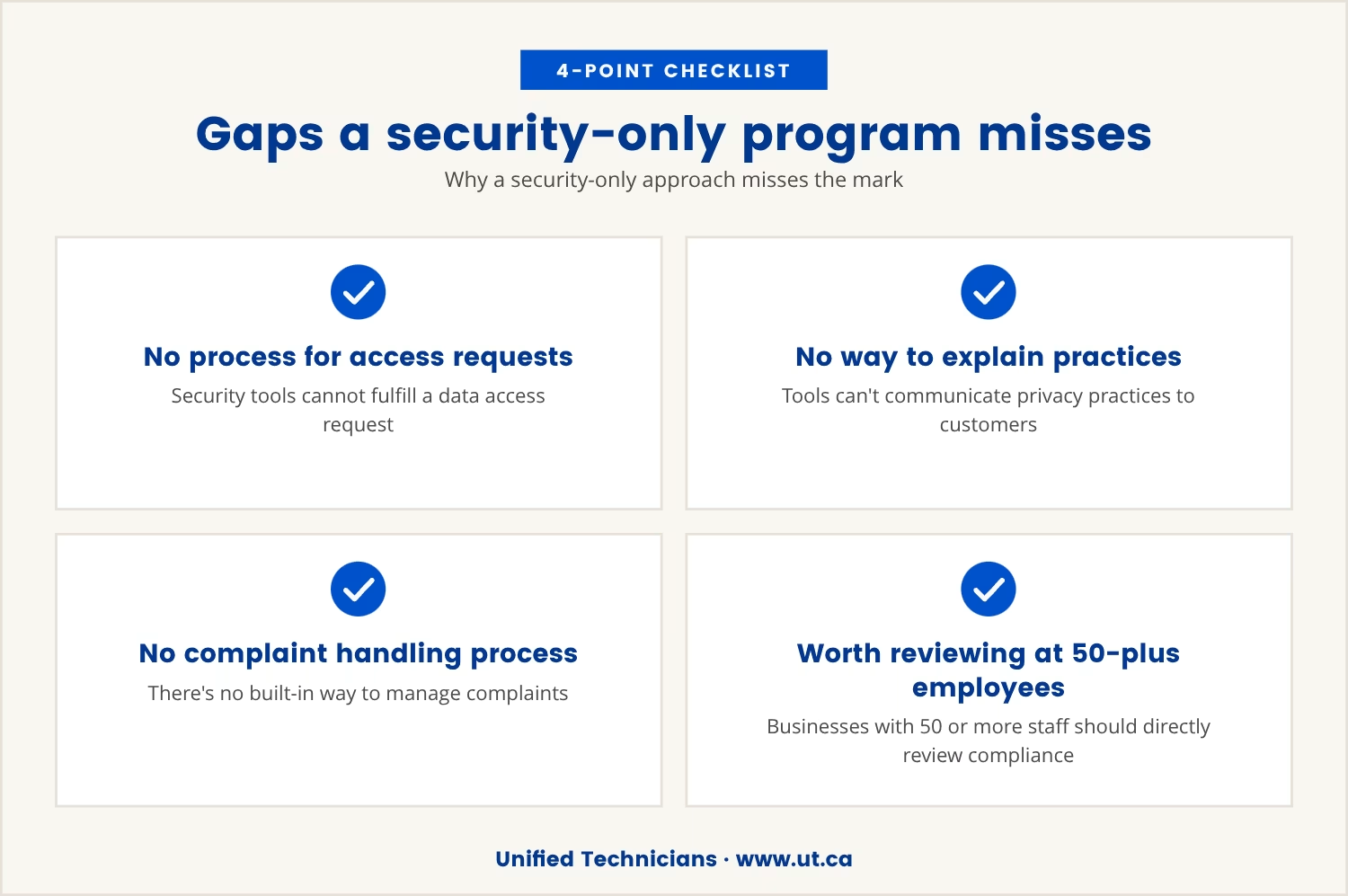
A program built only around technical safeguards can look airtight on paper, right up until someone asks for their data, challenges a practice, or flags an error no one caught. That's the moment the gap becomes visible.
Security tools have no answer for an access request, no way to explain your privacy practices to a customer, and no process for handling a complaint. Covering every fair information principle is what closes that range of risk, not stronger security alone.
If privacy compliance falls under your responsibility in a business with 50 or more employees, this is worth a direct review. Is every principle genuinely covered, or have some quietly become optional?
Building a privacy program that actually works
Treating every fair information principle as essential, rather than ranking some above others, is the surest route to real PIPEDA compliance. In practice, that means:
- Reviewing your privacy policies: Make sure they are clear, accessible, and up to date.
- Training your staff: Everyone who handles personal information should understand their responsibilities.
- Testing your processes: Regularly check how you respond to access requests, corrections, and complaints.
- Assigning accountability: Designate a privacy officer who oversees compliance and handles challenges.
- Documenting your practices: Keep records of how you collect, use, and protect personal data.
We think that kind of program only holds together when someone close to the technology itself is involved in building it, and we say that as a company that approaches this work as technology people first, not purely as business owners layering compliance on top.
We hold that same view about how we work: Alex comes at this business as a genuine technology person, not just an owner, and that shows in a habit of working directly with the systems themselves rather than managing compliance from a distance.
That instinct shapes how we read a system: not just where the data sits, but how it actually moves through collection, use, and disposal — which is where most of the ten principles live.
It's a position we hold, though we'd rather state it plainly than dress it up: privacy programs written by people who understand the underlying systems tend to catch the principle-level gaps that a purely procedural checklist misses.
Building on all ten principles, rather than the familiar few, is what reduces risk and builds lasting trust with clients, employees, and partners. Security remains one part of that — the rest comes down to how information gets managed day to day.

How we help Toronto businesses close privacy gaps
Many organizations with 50 to 250 employees in Toronto focus on technical security but overlook the full set of privacy requirements. At Unified Technicians, we know how easy it is to miss key principles when building a compliance program.
If you want to see how we approach privacy risks beyond just IT security, let’s talk about your current setup and where your program might need a closer look.
Want to see how a complete program works?
Try our full managed IT services free for 30 days—see how a complete privacy program supports your compliance from day one.
Frequently asked questions
What is the difference between PIPEDA and the Privacy Act?
PIPEDA applies to private-sector organizations across Canada, while the Privacy Act covers federal government institutions. A business operating in the private sector follows PIPEDA.
How do I know if my business is covered by PIPEDA?
PIPEDA applies to any organization that collects, uses, or discloses personal information in the course of commercial activities, which includes most businesses in Toronto unless a substantially similar provincial privacy law already governs them.
What are the main responsibilities of a privacy officer under PIPEDA?
A privacy officer oversees privacy compliance, develops privacy policies, trains staff, and responds to requests or complaints about personal information. They serve as the main point of contact for privacy issues inside the organization.
Can I store personal information outside of Canada under PIPEDA?
PIPEDA does not prohibit storing personal information outside Canada, though individuals must be informed if their data will be transferred elsewhere. Responsibility for protecting that data stays with you regardless of where it's stored.
What should I do if someone challenges my compliance with PIPEDA?
A clear complaints process is essential: respond promptly, investigate the issue, and provide a meaningful answer. If the individual remains unsatisfied, they can escalate the matter to the Office of the Privacy Commissioner of Canada for further review.
Alex Oosterman is the founder of Unified Technicians, bringing 12+ years of IT leadership and expertise in cloud technologies, cybersecurity, and business technology solutions.




.svg)
