.svg)

Does Ontario Privacy Law Really Match Quebec Law 25 Compliance?

Alex Oosterman

Meeting Quebec’s Law 25 does not automatically satisfy Ontario’s privacy law requirements. Treating the two as interchangeable can leave your business open to penalties and missed obligations in Ontario.
When a business in Toronto treats Ontario privacy law as a checkbox already ticked by Law 25 Quebec compliance, the risk is rarely visible until something breaks. The real cost often appears as fines, lost trust, or even a halt in operations when privacy obligations are missed or misunderstood.
Many organizations believe that meeting strict Quebec standards is enough everywhere else in Canada. This is not the case. Each province has its own privacy legislation, and the differences can leave you exposed where you least expect it.
Ontario privacy law is built on its own rules and expectations. If you rely only on what works in Quebec, you could miss key requirements specific to Ontario. For example, the way personal information must be handled or reported can differ, and those differences matter when a privacy breach occurs.
Understanding these gaps is not just about following the law—it’s about protecting your business from avoidable problems. If you assume compliance in one province covers you in another, you might be leaving your business open to costly mistakes.

Why Law 25 Quebec compliance does not guarantee Ontario coverage
Some businesses assume that if they follow Law 25 in Quebec, they are automatically covered in Ontario. This belief comes from the idea that stricter rules in one place should meet or exceed those in another. However, the reality is more complicated.
Ontario’s privacy law has its own set of requirements that do not always align with Quebec’s. For example, Ontario’s rules for the disclosure of personal information can be stricter or simply different from Quebec’s expectations. This means a process that passes in Quebec may still fall short in Ontario.
The difference is not just in paperwork. It affects how you handle personal information, how you respond to privacy breaches, and even how you report incidents. If your team is only trained on Quebec’s law, they may not know what to do when Ontario’s rules apply.
This gap can become a real problem during a privacy investigation. The Information and Privacy Commissioner in Ontario will look for compliance with Ontario’s standards, not Quebec’s. If your business cannot show that it meets those standards, you could face penalties or be required to change your practices quickly.
Key differences between Law 25 and Ontario privacy law
It’s easy to think privacy laws are similar everywhere, but the details matter. Here are some of the main differences that can catch businesses off guard:
Scope of personal information
Law 25 in Quebec and Ontario privacy law define personal information differently. What counts as personal in one province might not in another, so your policies need to reflect both.
Consent requirements
Quebec’s Law 25 has specific rules about how and when you must get consent from individuals. Ontario’s laws may require different types of consent or more detailed explanations to users.
Reporting privacy breaches
Ontario requires organizations to notify affected individuals and the privacy commissioner of certain privacy breaches. Quebec’s process is not identical, so following only one set of rules can leave gaps.
Cyber incident reporting
Ontario’s expectations for reporting cyber incidents may differ from Quebec’s, especially regarding timing and the level of detail needed. Missing these details can lead to non-compliance.
Role of the privacy commissioner
The privacy commissioner of Ontario has authority and processes that are not the same as Quebec’s regulator. Understanding who oversees privacy in each province is essential for proper compliance.
Record-keeping and documentation
Ontario may require different records or longer retention periods for privacy-related documents. If your documentation only meets Quebec’s standards, you may not have what Ontario expects.
What Toronto businesses should know about local privacy expectations
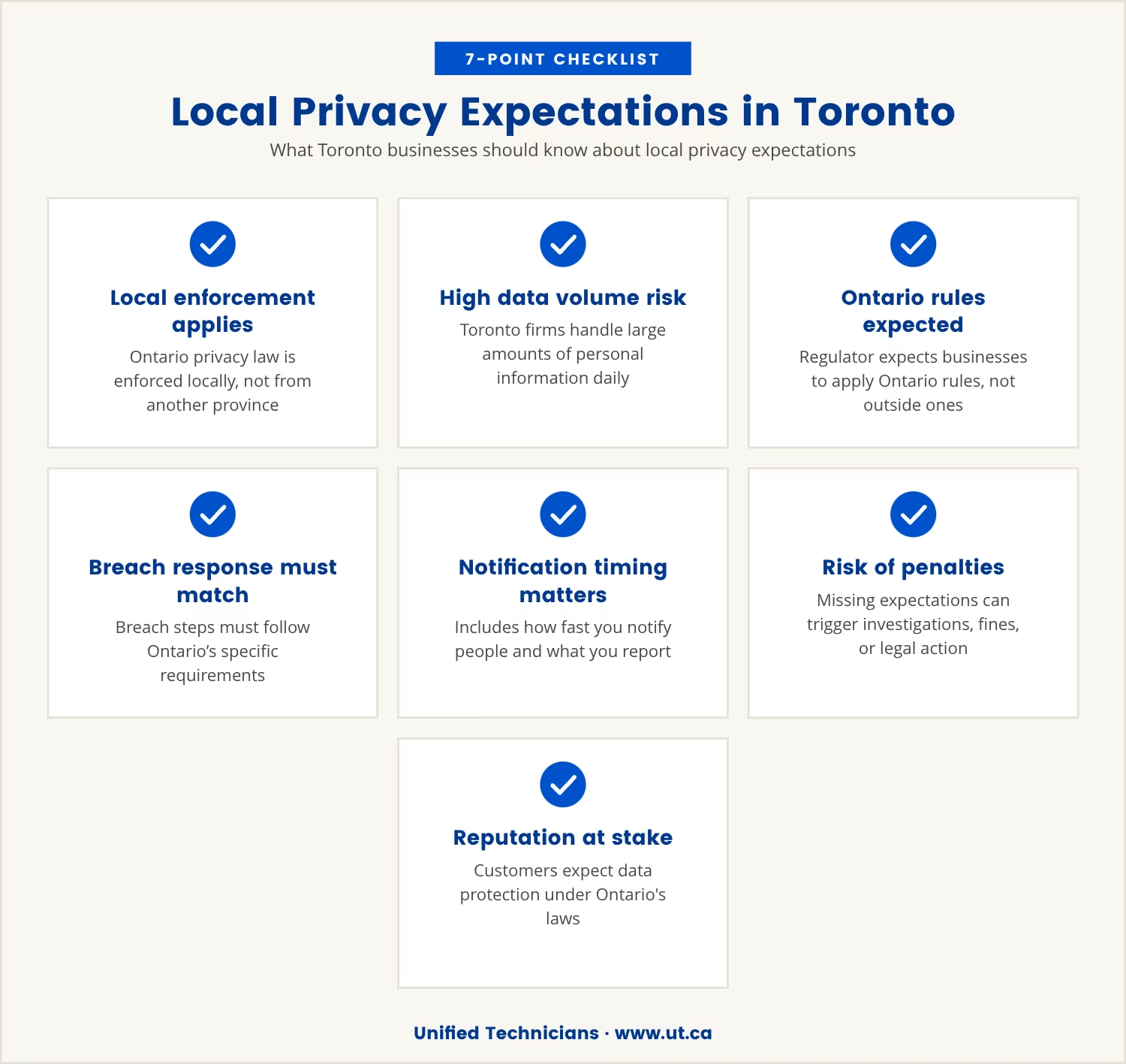
For businesses operating in Toronto, it’s not enough to rely on compliance from another province. Ontario’s privacy law is enforced locally, and the standards are shaped by the needs and risks found here.
Toronto organizations face unique challenges, especially with the volume of personal information handled daily. The local privacy commissioner expects businesses to understand and apply Ontario’s rules, not just those from elsewhere.
If you experience a privacy breach in Toronto, the response steps you take must match Ontario’s requirements. This includes how quickly you notify affected people and what information you provide to the authorities.
Failing to meet these local expectations can lead to investigations, fines, or even legal action. It can also damage your reputation with customers who expect their data to be protected under Ontario’s laws.
Ontario privacy law: Where obligations diverge from Quebec
It’s important to see exactly where Ontario’s obligations differ from Quebec’s. Here are some of the most significant areas:
- Breach notification: Ontario requires prompt notification to both individuals and the privacy commissioner when certain types of breaches occur. Quebec’s requirements are not always the same.
- Access to information: Ontario law gives individuals specific rights to access their personal information, which may differ from Quebec’s approach.
- Third-party disclosures: The rules for sharing personal information with third parties can be stricter in Ontario, especially for sensitive data.
- Employee training: Ontario expects organizations to train staff on local privacy rules, not just general best practices or Quebec standards.
- Privacy impact assessments: Ontario may require assessments for new projects or technologies that handle personal data, even if Quebec does not.
These differences mean that a one-size-fits-all approach does not work. Each province’s law must be understood and applied on its own terms.
Why relying on Law 25 compliance can leave you unprotected
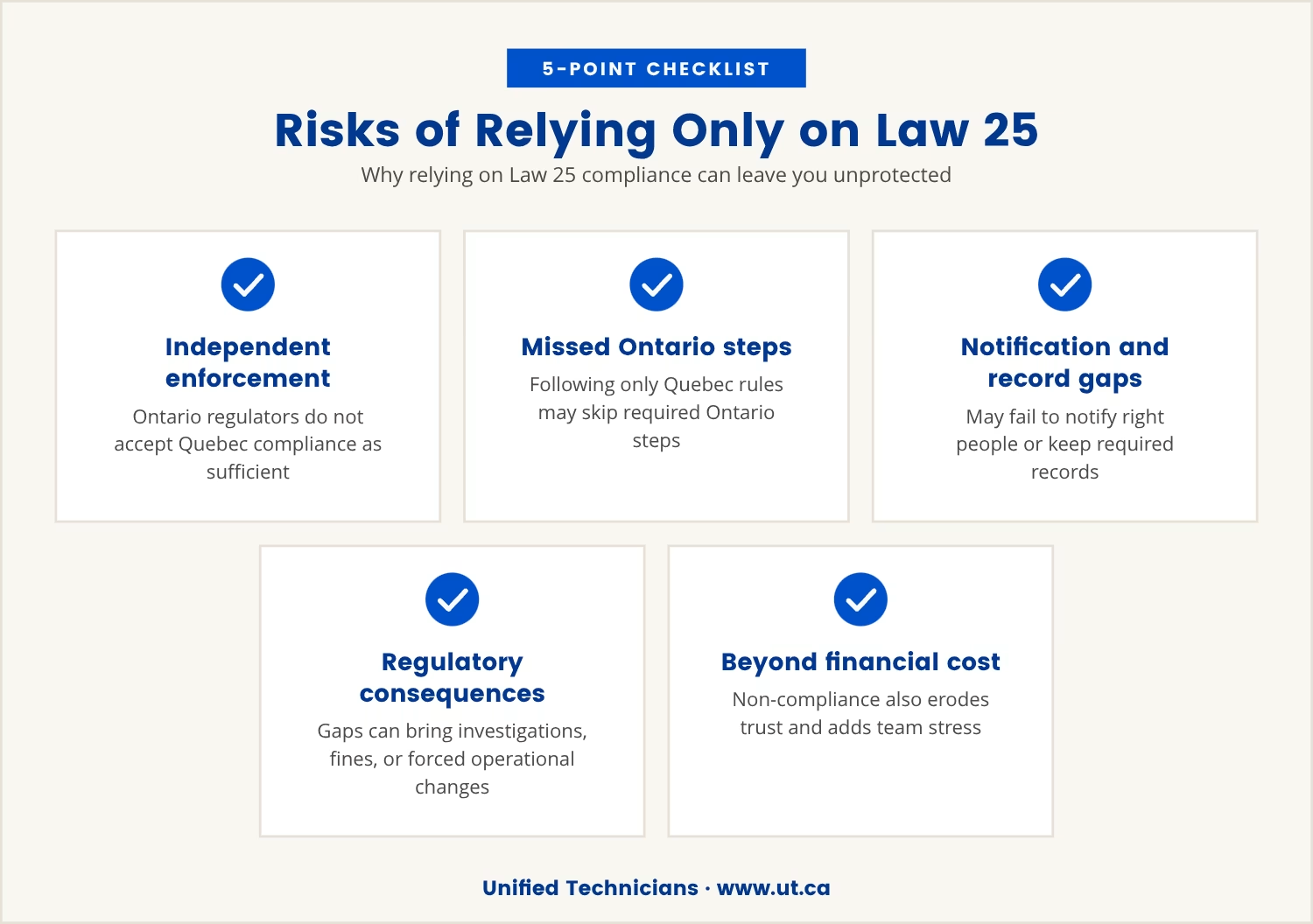
Many organizations believe that meeting the strict requirements of Law 25 is enough to keep them safe everywhere. This is a risky assumption. Ontario’s privacy law is enforced independently, and regulators here do not accept compliance with another province as proof of meeting local standards.
If your business only follows Quebec’s rules, you may miss key steps required in Ontario. For example, you might not notify the right people after a privacy breach, or you could fail to keep the records Ontario expects. These gaps can lead to investigations, fines, or even forced changes to your operations.
The cost of non-compliance is more than just financial. It can also mean lost trust from customers and partners, and extra stress for your team. With 68% of cybersecurity roles becoming more stressful, it’s clear that unclear or overlapping compliance requirements only add to the pressure.
Practical steps for dual compliance
Staying compliant in both Ontario and Quebec is possible, but it takes planning. Here are some steps to help you cover both sets of rules:
- Map your obligations: List out the specific requirements for each province so you can see where they match and where they differ.
- Update your policies: Make sure your privacy policies address the unique rules of both Ontario and Quebec.
- Train your staff: Provide training on the differences, so your team knows what to do in each location.
- Review breach response plans: Check that your plans meet Ontario’s requirements for notification and documentation, not just Quebec’s.
- Consult with experts: When in doubt, seek advice from professionals who understand both legal frameworks.
- Monitor for changes: Privacy laws can change. Stay updated so your compliance stays current.
The bottom line: One province’s compliance is not enough
Assuming that Law 25 Quebec compliance covers Ontario privacy law obligations is a shortcut that can leave your business exposed. Each province enforces its own rules, and the differences are real and significant.
To protect your business, your customers, and your reputation, you need to understand and meet Ontario’s specific privacy requirements. Anything less is a risk you don’t need to take.

How Unified Technicians helps you avoid costly privacy gaps
If your business has 50 to 200 employees, you may be relying on privacy compliance processes that only cover one province. At Unified Technicians, we understand how easy it is to miss the differences between Ontario and Quebec privacy laws.
We invite you to see how our team approaches privacy compliance for businesses like yours, and how a conversation about your current setup can help you avoid unnecessary risk.
Want to test your compliance risk?
You can try our full managed IT services free for 30 days, so you can see how your privacy compliance holds up before making a commitment.
Frequently asked questions
How does a privacy breach in Ontario differ from one in Quebec?
A privacy breach in Ontario triggers specific notification and reporting requirements that may not be the same as Quebec’s. In Ontario, you must notify both affected individuals and the privacy commissioner if certain types of personal information are involved. Quebec’s rules may have different thresholds or timelines, so following only one set of rules can leave gaps in your response.
What is the role of the office of the privacy commissioner in Ontario?
The office of the privacy commissioner in Ontario oversees compliance with provincial privacy laws. This office investigates complaints, enforces privacy regulations, and provides guidance to organizations on how to handle personal information. Their authority is separate from Quebec’s regulator, and they expect businesses to follow Ontario’s specific rules.
Do I need to complete a privacy impact assessment for every new project?
Not every project requires a privacy impact assessment, but Ontario may expect one for new systems or processes that handle sensitive personal information. This helps identify and address privacy risks before they become problems. It’s best to review each project individually to determine if an assessment is needed.
How should I handle the disposal of personal information in Ontario?
Ontario privacy law requires organizations to dispose of personal information securely when it is no longer needed. This means using methods that prevent unauthorized access, such as shredding paper records or securely deleting digital files. Simply deleting files or throwing away documents is not enough.
What should I do if I’m unsure about the differences between Ontario and Quebec privacy laws?
If you’re unsure about the specific requirements in each province, consult with a privacy professional or legal advisor who understands both frameworks. Relying on general knowledge or assuming the laws are the same can lead to mistakes and potential non-compliance.
Alex Oosterman is the founder of Unified Technicians, bringing 12+ years of IT leadership and expertise in cloud technologies, cybersecurity, and business technology solutions.




.svg)
