.svg)

Cybersecurity Insurance Canada: What Happens Before You Measure Your Risks?

Alex Oosterman

Buying cybersecurity insurance before assessing your real risks often means paying for coverage that doesn’t actually fit your business. This approach can leave critical gaps and expose you to costs your policy won’t cover.
It's widely assumed that buying cybersecurity insurance Canada businesses rely on is itself the protective step. In practice, a policy bought before you understand your own risks often fits poorly.
Companies that skip the work of measuring their own risks end up with coverage that doesn't match how they actually operate. Many jump straight to a policy, only to discover later that it doesn't line up with their real vulnerabilities, and that gap only becomes visible once something has already gone wrong.
Paying for insurance before understanding your own security gaps produces a particular kind of problem: expensive protection that still leaves real threats uncovered. The bill doesn't reflect your true needs, and the sense of safety it buys is harder to rely on than it looks.
What closes that gap is a security gap analysis - a structured review of where your systems and processes are actually exposed, run before you sign anything. It shows what you're exposed to and what genuinely needs insuring.
Cybersecurity insurance Canada policies exist to help businesses recover from cyberattacks, data breaches, and other digital threats, and that recovery value depends entirely on how well the policy matches your actual risks.
Without a clear picture of your security posture, there's no way to know whether a policy fits or whether it's simply a costly guess. Skip the gap analysis, and you risk paying for coverage that doesn't protect your business where it matters most.

Why skipping a security gap analysis leads to mismatched coverage
Many businesses in Toronto move straight to buying cybersecurity insurance on the assumption that any policy will do. Skip the security gap analysis, though, and you don't actually know what you're protecting against, since this is the step that surfaces the weak spots in your systems and processes.
Without it, you're left relying on assumptions, and those assumptions can be wrong - you might believe your business is safe from certain threats when it isn't. Insurers, for their part, price policies on general risk factors rather than on your specific situation.
The result is a mismatch: you end up paying for coverage that doesn't address your most likely threats. If your biggest exposure is phishing but your policy is built around data breaches, you're unprotected exactly where you need protection. A gap analysis is what connects your real risks to the right coverage.
The hidden costs of insuring before understanding your risks
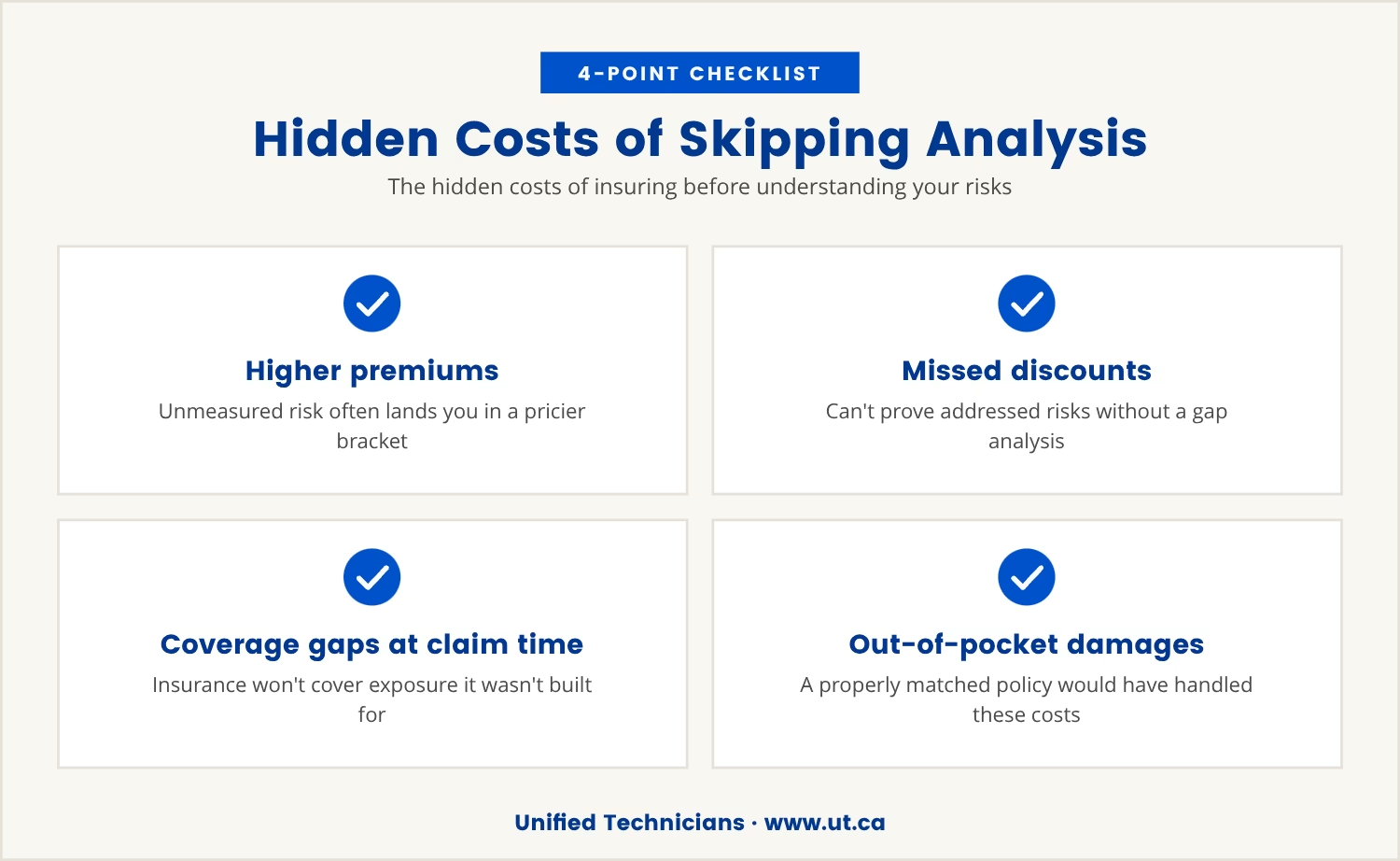
Buying a policy before you've measured your vulnerabilities can cost you in more than one way. You may pay higher premiums for coverage you don't need, since insurers price by perceived risk, and an unmeasured risk tends to land you in a higher bracket by default.
You may also miss discounts or better terms, because some insurers lower rates for businesses that can demonstrate they've addressed specific risks - and without a gap analysis, there's no way to prove you have.
Worse, if an attack happens and your policy doesn't match your real exposure, insurance won't cover what it wasn't built for. You could face significant out-of-pocket costs for damages that a properly matched policy would have handled.
How cybersecurity insurance Canada policies are priced without a risk baseline
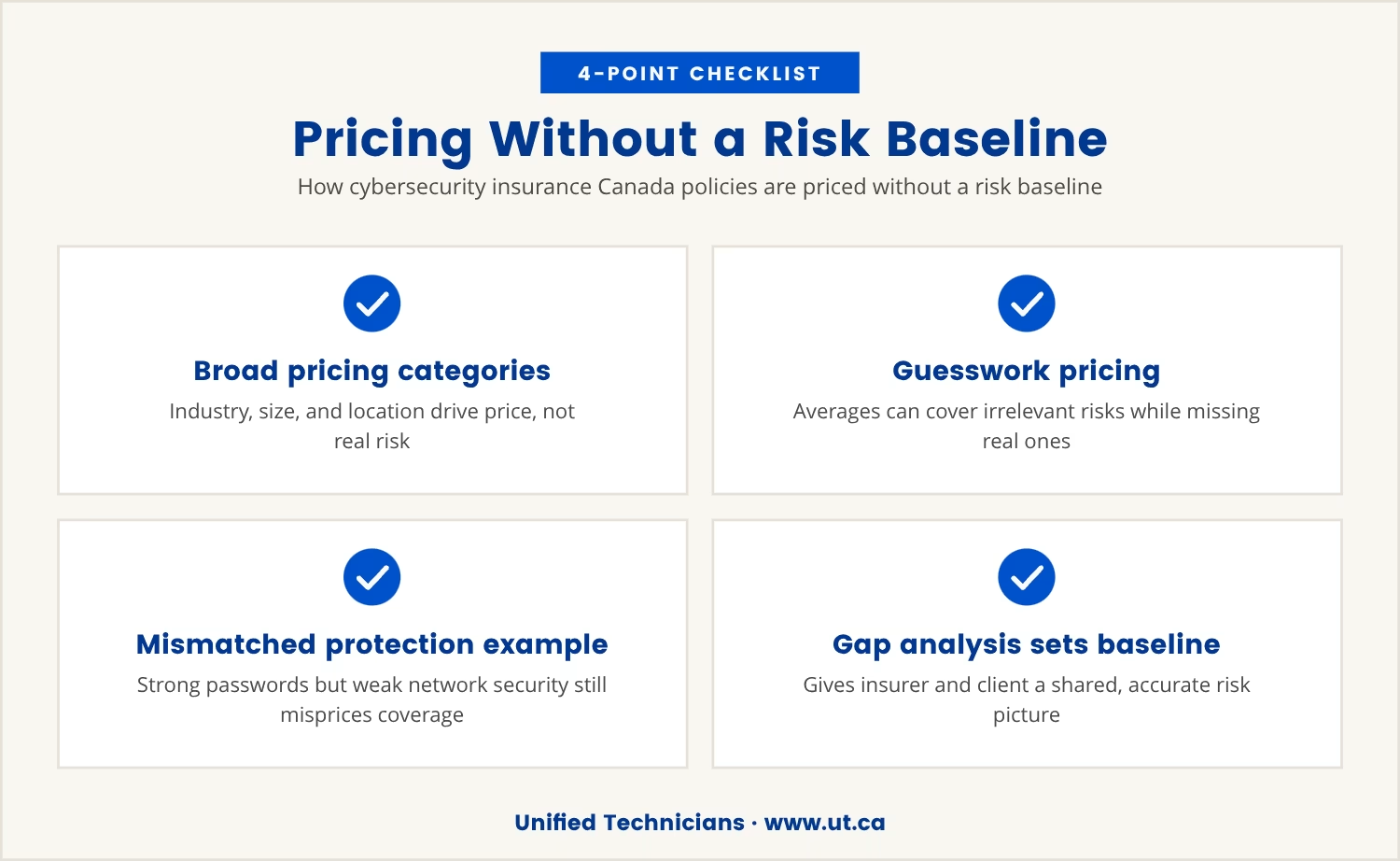
Providers across Canada set prices for cybersecurity insurance using broad categories: industry, company size, sometimes location, including Toronto. None of that captures the detail that actually matters without a security gap analysis behind it.
In its absence, pricing falls back on averages and assumptions, which means your policy can end up built around risks that barely apply to you while missing the ones that do. A company with strong password policies but weak network security, for instance, could still end up paying for the wrong type of protection entirely.
A security gap analysis replaces that guesswork with a real baseline, giving both you and the insurer a shared, accurate picture of your true risks. From there, the policy can be tailored to fit, so you're neither paying for unnecessary coverage nor leaving critical gaps exposed.
What a security gap analysis reveals before you buy insurance
A security gap analysis goes well beyond a checklist - it's a process that uncovers the real state of your cybersecurity. Here's what it typically brings to light:
Your current security controls
A gap analysis reviews the protections already in place - firewalls, antivirus software, authentication methods - so you can see clearly where you're strong and where you're exposed.
Weak points in your systems
It identifies where your defenses are thin or missing outright, which are precisely the places most likely to be targeted in an attack.
Compliance gaps
Where your business is required to follow specific regulations, the analysis shows where you're falling short, which matters directly for insurance, since non-compliance can affect claims.
Incident response readiness
It checks whether you have a plan for responding to a breach, since insurers often want assurance that you're prepared to act quickly.
Employee awareness
The analysis looks at how well your team understands threats like phishing or smishing, given that human error remains a common cause of breaches.
Third-party risks
Vendors and partners can introduce their own vulnerabilities, and the analysis highlights where those outside connections put your business at risk.
Data protection practices
It reviews how you store, access, and back up sensitive information, since weak data management tends to turn a small breach into a much bigger loss.
Bulletproofing your insurance strategy: Steps to align coverage with real risks
A sound insurance strategy starts with understanding your business inside and out. Here's how to keep your coverage matched to your true exposure:
- Start with a cyber risk assessment: This gives you a clear view of your vulnerabilities before you shop for insurance.
- Map your business needs: Identify what data, systems, and processes are most critical to your operations.
- Review your current controls: Make a list of existing protections and where they fall short.
- Compare policies carefully: Look for insurance that covers your actual risks, not just generic threats.
- Ask about exclusions: Understand what isn't covered so you're not surprised during a claim.
- Update regularly: As your business changes, so do your risks. Revisit your analysis and coverage each year.
Why Toronto businesses face unique challenges in matching insurance to risk
Toronto companies operate in a complex digital environment, where regulations and threats shift quickly, and strict data privacy laws combine with a high volume of digital transactions to raise the stakes of a mismatch. That combination makes matching insurance to your real risk profile especially important.
A generic policy rarely accounts for the specific threats facing businesses in this city, and certain industries here are more likely to face targeted attacks than others. Without a security gap analysis, those local risks can slip past unnoticed, leaving you with coverage that doesn't fit your situation.
Working with a provider who understands the Toronto landscape helps align insurance with actual needs, though that partnership still depends on you bringing your own knowledge of your business to the table. Only a thorough analysis reveals what truly needs protection.
The risk of false confidence: When insurance gives a sense of security, it can't deliver
Relying on insurance alone can feel like protection, but that confidence is only as solid as the match between your policy and your real risks. Businesses sometimes assume a policy covers any cyber event; in reality, insurance is only as good as the information behind it.
Without measured vulnerabilities, the gaps stay invisible until a breach exposes them, and by then the fallout is yours to handle. That false sense of security carries a cost on two fronts: financially, and in the trust of customers and partners.
The main point stands: buying insurance before running a security gap analysis locks you into coverage that may not protect you where you need it most. Real protection starts with knowing your risks first, then choosing insurance built to fit those realities.

Rethinking your insurance approach for real protection
Many organizations with 50 to 250 users find themselves holding a cybersecurity insurance policy that doesn’t actually match their real-world risks. At Unified Technicians, we see how easy it is to end up with coverage that feels safe but leaves gaps uncovered.
If you want to see how our team approaches risk measurement before recommending any insurance, let’s talk about your current setup and what would truly protect your business.
Want to see your risk gaps in action?
Get a 30-day free trial of our full managed IT services and see how your real risks compare to your current coverage—no obligation for qualified businesses.
Frequently asked questions
How does a security gap analysis improve my cyber insurance policy?
A security gap analysis identifies your business's real vulnerabilities and strengths. Understanding these details lets you choose a cyber insurance policy that covers your actual risks rather than just general threats, so you're less likely to pay for unnecessary coverage and more likely to be protected where it matters.
What happens if my insurance doesn't cover a specific cyberattack?
If your policy excludes a certain type of attack, you become responsible for all related costs, including recovery and legal fees. Knowing exactly what your policy includes, and matching it to your business's unique risk profile beforehand, is what prevents that outcome.
Can I lower my premiums by improving my cybersecurity strategy?
Yes - many insurers offer better rates to businesses that can demonstrate strong cybersecurity practices. Completing a security gap analysis and addressing the weaknesses it finds can qualify you for discounts or more favorable terms, while also reducing the chance of a breach.
Why do insurance claims get denied after a data breach?
Claims are often denied when the insurer finds that a business didn't meet specific security requirements, or when the breach falls outside the policy's coverage. Regularly reviewing your policy and keeping your security controls current helps prevent that situation.
How often should my business reassess its cyber risks?
Reassess your cyber risks at least once a year, or whenever your systems, staff, or operations change significantly. Regular assessments keep both your insurance and your security measures aligned with new threats and evolving business needs.
Alex Oosterman is the founder of Unified Technicians, bringing 12+ years of IT leadership and expertise in cloud technologies, cybersecurity, and business technology solutions.




.svg)
